
The Intergalactic Buttoneers Modernized the ETC Space Bridge in Time for Fall Festival
There are games that can be played anywhere, anytime, but what about games created for a specific physical place and time? Location-based experiences immerse you in a world that uses interactive elements, storytelling, and technology. You may have encountered these world-building experiences at an amusement park, a themed escape room, or by seeing your favorite artist's work come to life in an immersive digital art exhibit.
Introducing the Entertainment Technology Center Space Bridge Challenge
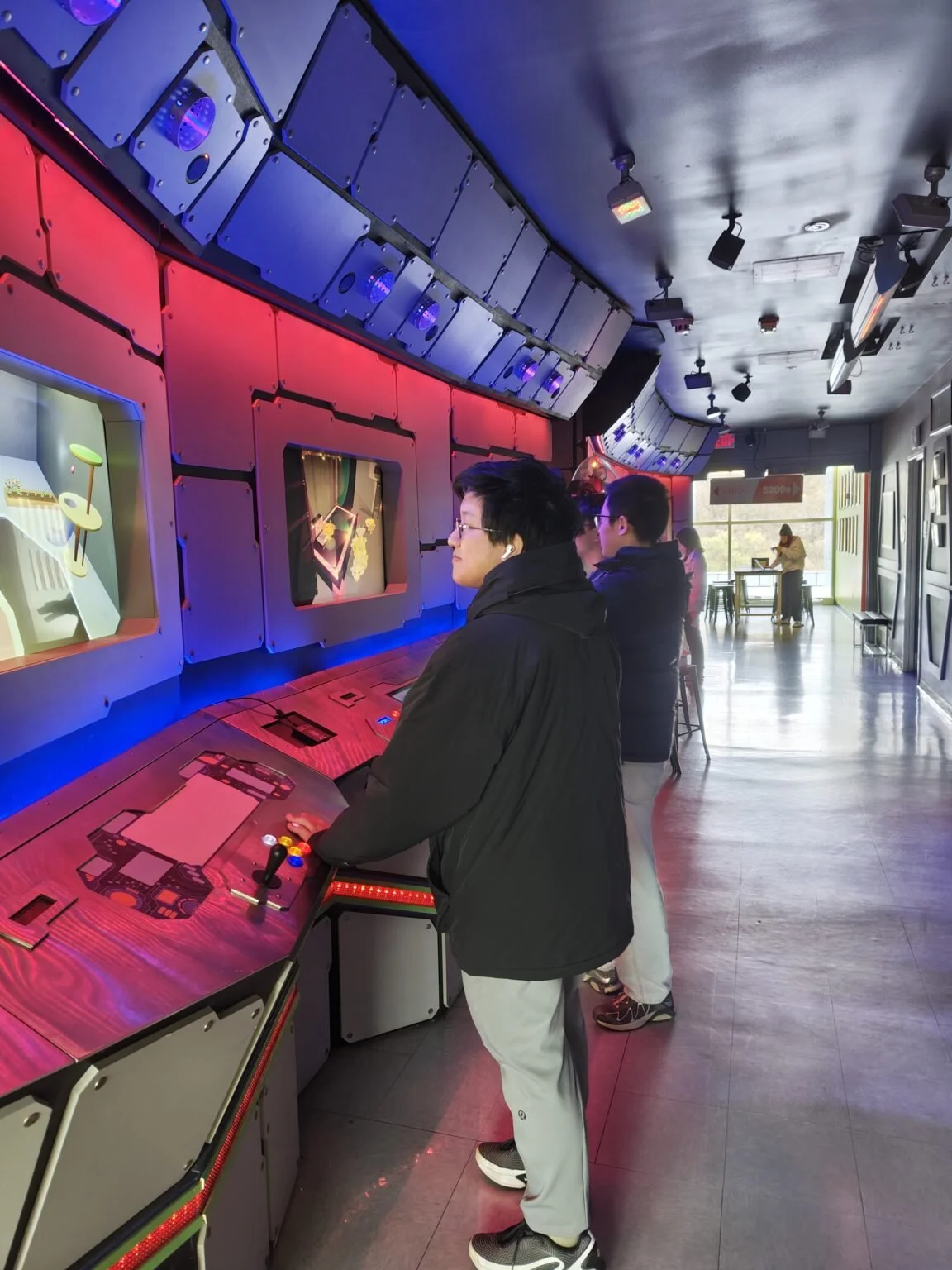
Expansive and immersive built-in installation. Six polished metal arcade cabinets run by six separate computers. Two trackballs, 36 buttons, eight monitors, two of which are touchscreens, and two joysticks – all inactive.
And the set of challenges:
modernize the Space Bridge installation itself,
develop a series of engaging location-based experience prototypes for the Space Bridge, and
design a final immersive experience to bring the Space Bridge to life
…all in under four months, in time for the 2025 ETC Fall Festival.
The Intergalactic Buttoneers team of Carnegie Mellon University (CMU) Entertainment Technology Center (ETC) master’s students, Derek Wong, Yifan Chen, Emily Zhang, Nina Gamboni, and Junru Yang, were up for this challenge. “It was our first time running a location-based event. It’s stressful as you have one shot”, said Gamboni. “We knew we weren’t creating just a game, but an experience.”
Guided by instructors Ruth Comley and Dave Culyba, the team was ready to launch their creative thinking and expertise in the fields of software development, experience design, programming, applied mathematics, 2D art, user interface (UI) design, illustration, visual storytelling, and software project management to create a location-based experience specifically for CMU ETC Space Bridge.
Countdown Begins: Creating a Mini-Space Bridge
The Intergalactic Buttoneers first built a mini version of the Space Bridge that emulated all the functionality of the original, enabling them to work from anywhere to determine how to modernize the system and experiment with prototypes. “The mirror station helped us to figure out how we would manage the controls, create documentation, and understand how to build for it,” said Wong. With its three monitors, one touchscreen, 18 buttons, joystick, and two trackballs, creating this mirror mini-Space Bridge required a mix of physical work, including hand-writing buttons, coordinating with tech teams, and setting up software.
Imagining the Possibilities for the More Than Digital World
Using the mirror mini-Space Bridge, the Intergalactic Buttoneers brainstormed three prototypes, both to inform their Fall Festival game and future Space Bridge uses. Each possibility played with different types of location-based experiences and goals. “In the end, we did include a little bit from each prototype into the final project,” said Wong.
Prototype 1: Drawing inspiration from classic space-flying games, this three-player game required player collaboration and used a trackball to navigate the spaceship.
Element used in the final experience: Trackball navigation.
Prototype 2: Reflective of fish tanks in waiting rooms and lobbies, this game featured an aquarium on an idle screen, where passersby could quickly tap bubbles from the fish to earn points, highlighting brief, tactile interactions.
Element used in the final experience: All 18 buttons were given a simple, yet unique, purpose.
Prototype 3: Explored how a small portion of a larger group could interact while others watch the game. Additionally, ways for attendees to revisit a game at any time and still have a continuous experience, informed by games such as Observation Duty’s security screens.
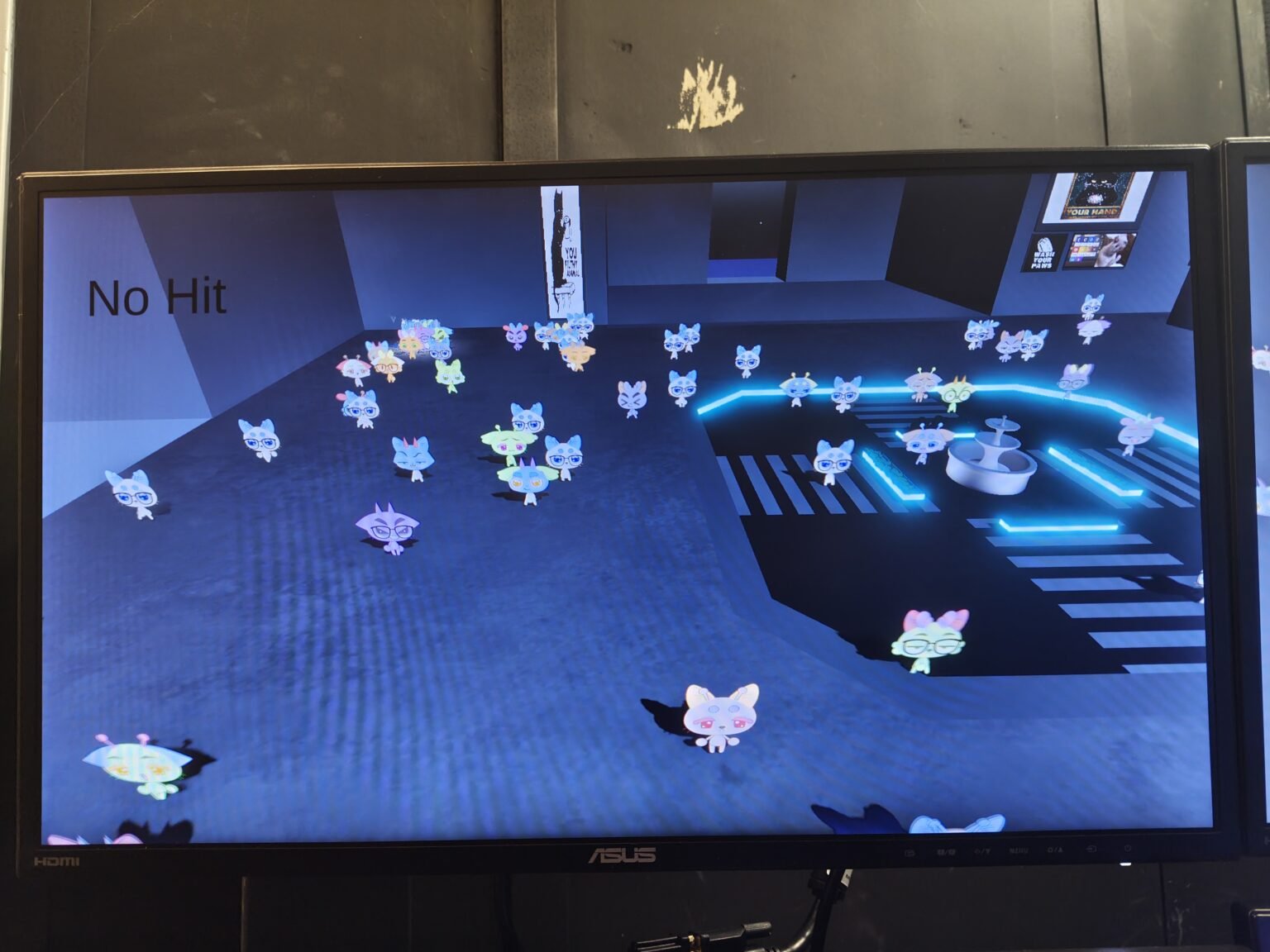
Element used in the final experience: Using the touchscreen and allowing characters to walk around on their own while things in the game changed over time.
Key to the game’s success was getting feedback during two playtest days with first-year students. “We planned the playtest to have a group of students enter all at once so they could experience the game closest to how it would be at the busy Fall Festival.” Gamboni said. “To see how people naturally, organically interacted with it. That was rewarding”.
Ready for Launch at ETC’s Fall Festival
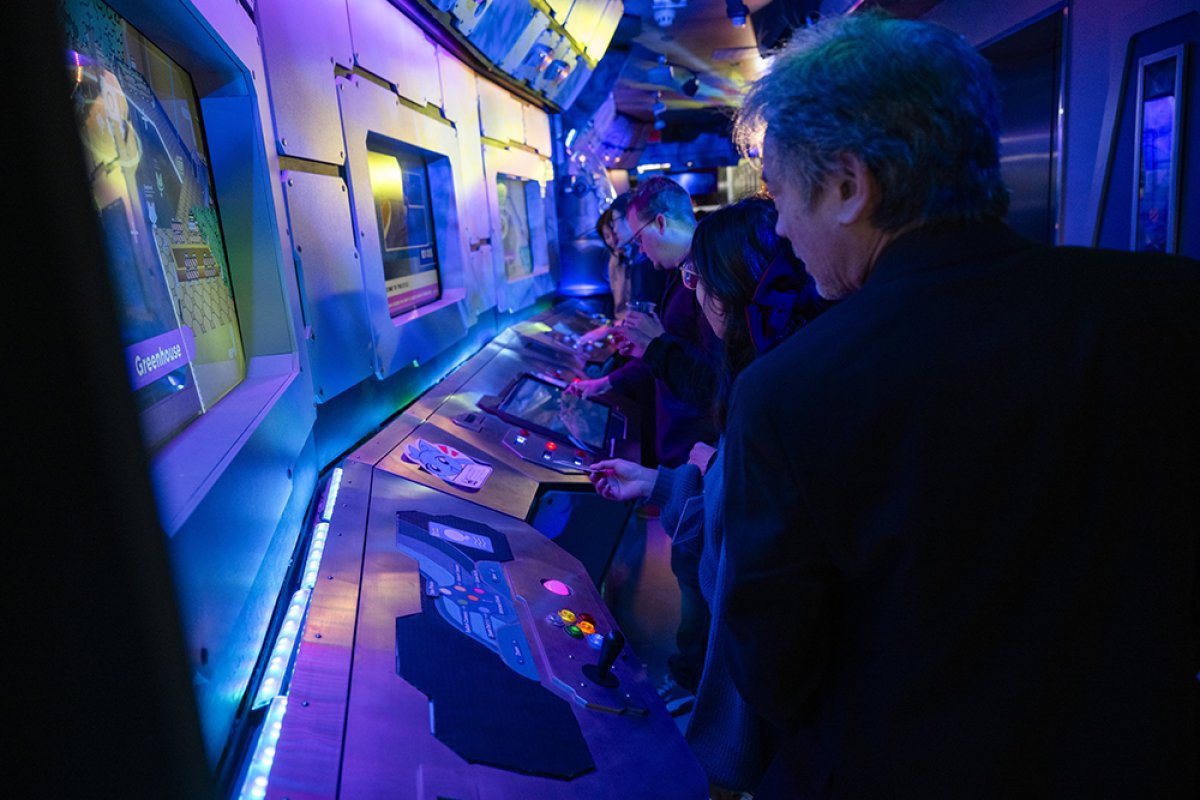
In location-based experiences, there is a physical experience to create alongside the development of a digital game. “We had to consider all the physical locations of the game, including labels and cardboard cutouts to provide user interface guidance, as well as the in-person interactions for the ETC Fall Festival, which I had not thought about before,” said Wong.
At the entrance to the ETC Fall Festival 2025, the Intergalactic Buttoneers team gave each attendee an RFID card with an assigned character. When attendees reached the immersive 5th-floor Space Bridge, they quickly scanned their cards and personalized their character, which was then sent off into the virtual game world. Wong adds that, “A big consideration for the team was how to keep attendees moving through the area, so they could understand and engage quickly with the game and then leave and check on their characters later using prompts we put up around the festival.”
Reflecting on the difference between purely digital and location-based experiences, Gamboni said, “Because you are creating an in-person experience for a location-based game, the button interactions can be simpler, and it's fun to keep things simple.”
A Bridge from the Past to the Future
The team created a platform for future development through updates to system functionality, the development of a mini-Space Bridge, exploration of various location-based experiences, and a launch at ETC Fall Festival 2025. It was also important to the team to respect the Space Bridge’s current design, history, and perspectives of the students and faculty who have contributed to its evolution.
The Space Bridge can now support new game development opportunities for CMU ETC students, such as in their required Building Virtual Worlds class, where students rapidly create a series of games. The Intergalactic Buttoneers are excited to see what the future of the Space Bridge will hold.