
Trinity Brings Cross-Platform Co-op to the Couch
At Carnegie Mellon University’s Entertainment Technology Center (ETC), a student team has been building something ambitious and fun. It’s called Trinity, and it’s a multiplayer co-op game that unites three players on three different platforms: VR, mobile, and PC. Designed for in-person play, Trinity isn’t just a tech demo. It’s a thoughtful, playful experiment in how games can bring people together, no matter their skill level or device.
“We imagine players sitting next to each other on the couch, like in a living room,” said producer Jerry Zheng. That’s exactly what Trinity aims for: an experience that’s cooperative, physical, and social.
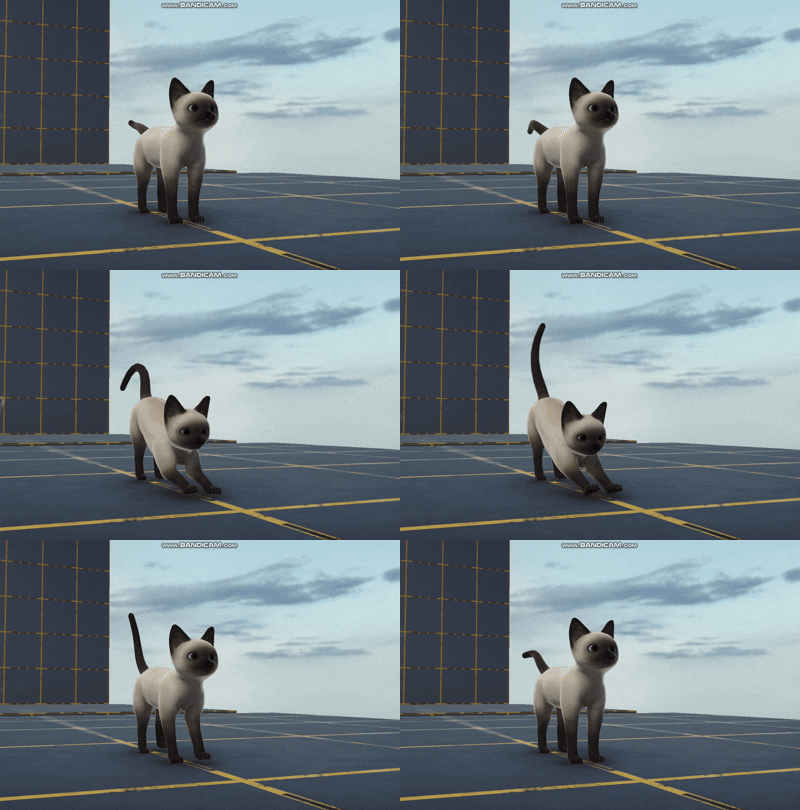
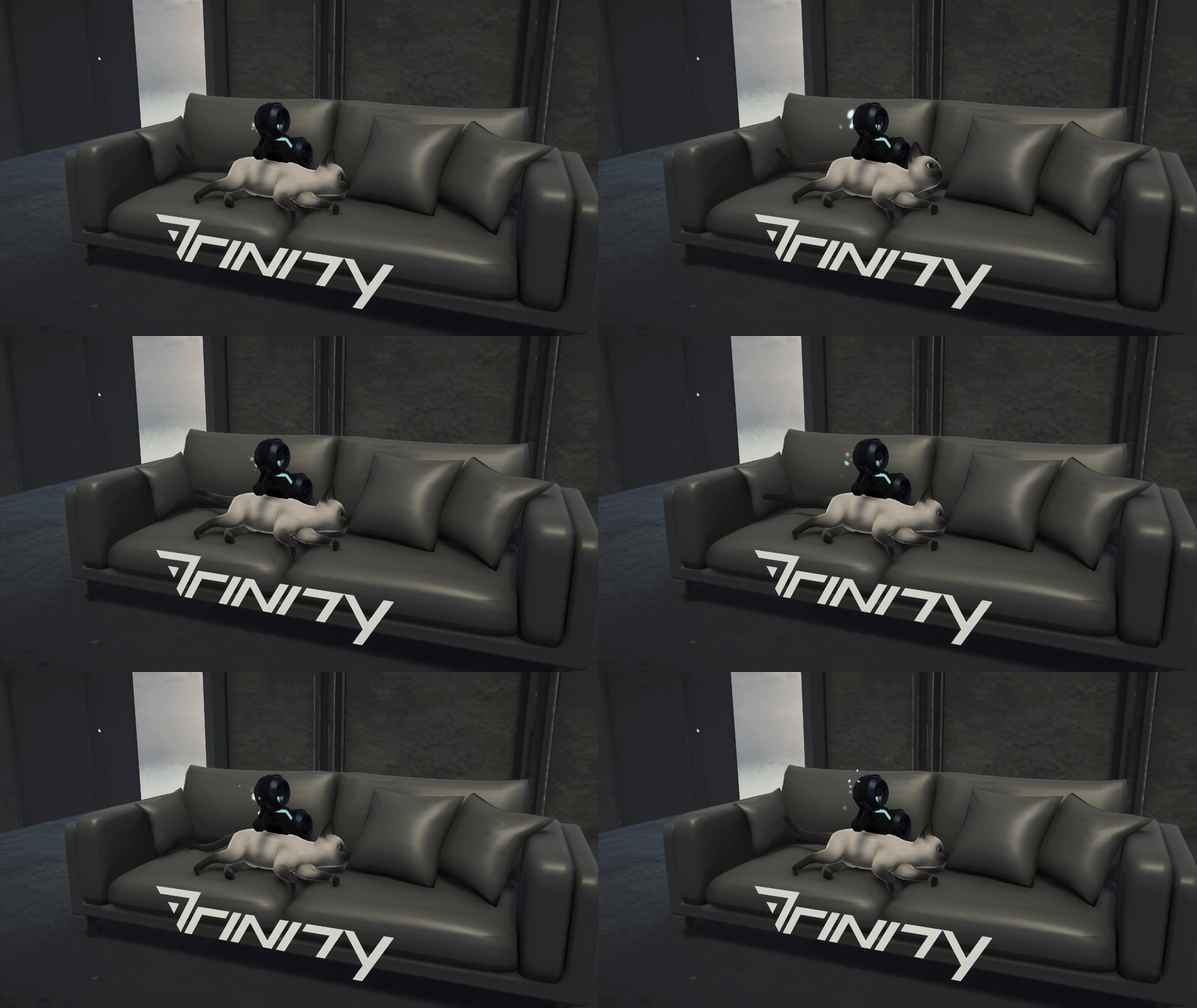
Each player gets a unique role. One person straps into a VR headset and uses hand tracking to interact with the world as a giant character. Another takes the mobile phone, using tilting and even blowing into the mic to power tools in the game. The third plays on a controller, guiding a small cat-like character through puzzling levels. Each role is distinct, but success requires teamwork.

That accessibility was key to the team’s vision. “We have players who are really good at games and also players who have never tried games before,” Zheng explained. “They can cooperate really well because they can choose what kind of device they want to try.” In testing, experienced gamers gravitated to VR or PC, while newcomers jumped in with their phones.
The project began as a student pitch and was built over the course of a semester. Inspired by games like It Takes Two, Trinity pushes the idea further—from two players on one screen to three players on totally different devices, all sharing the same physical space. “As far as I know, there is no game on the market that really streamlines PC, VR, and mobile together,” Zheng said. “We’re the first ones to actually make it work.”
Originally designed with Gen Z in mind, Trinity’s playtests revealed something unexpected: the game clicked with a much wider audience. Kids played with parents; professors brought in their grandkids. “Usually that won’t happen, but this game made it possible,” Zheng notes.
That cross-generational appeal puts Trinity in good company with party staples like Jackbox, and it’s one reason the team sees a future beyond the classroom. The team is even exploring pitches to major game and hardware companies. Trinity fits perfectly into the multi-platform, living-room entertainment trend. But for now, Trinity has done what most games hope to do, get people laughing, connecting, and playing together.
Trinity was created by a multidisciplinary ETC team: Yifan Jiang (Programmer), Sharon Liu (VFX/Sound Artist), Vector Liu (Game Designer), Helen Yang (Character/Tech Artist), Max Zhang (Environment Artist), and Jerry Zheng (Producer/Programmer).
The project was developed under the advisory of professors Brenda Harger and Scott Stevens.