
Kicks Lab Gives Young Adults a Head Start in STEAM Through Shoe Design
Kicks Lab is reimagining STEAM education for young adults through an unexpected medium — shoes.
Emerging from Carnegie Mellon University’s Entertainment Technology Center (ETC), Kicks Lab is an experimental, educational video game meant to encourage middle school students’ curiosity in topics that blend science, arts, and engineering, teaching them how design impacts everyday life. Kicks Lab is made up of an interdisciplinary group of CMU master’s students, including Elizabeth (Libby) Egan, Jiwon Park, Samantha Lai , Skye Gao, and Xiwei (Steven) Wang. The team worked in collaboration with Project Advisors, Charles Johnson and Ricardo Washington, and external partners, Ansys and Zellerfeld.
“The goal is to make the shoe manufacturing and simulation process relatable, ultimately inspiring interest in STEAM careers,” said Lai.
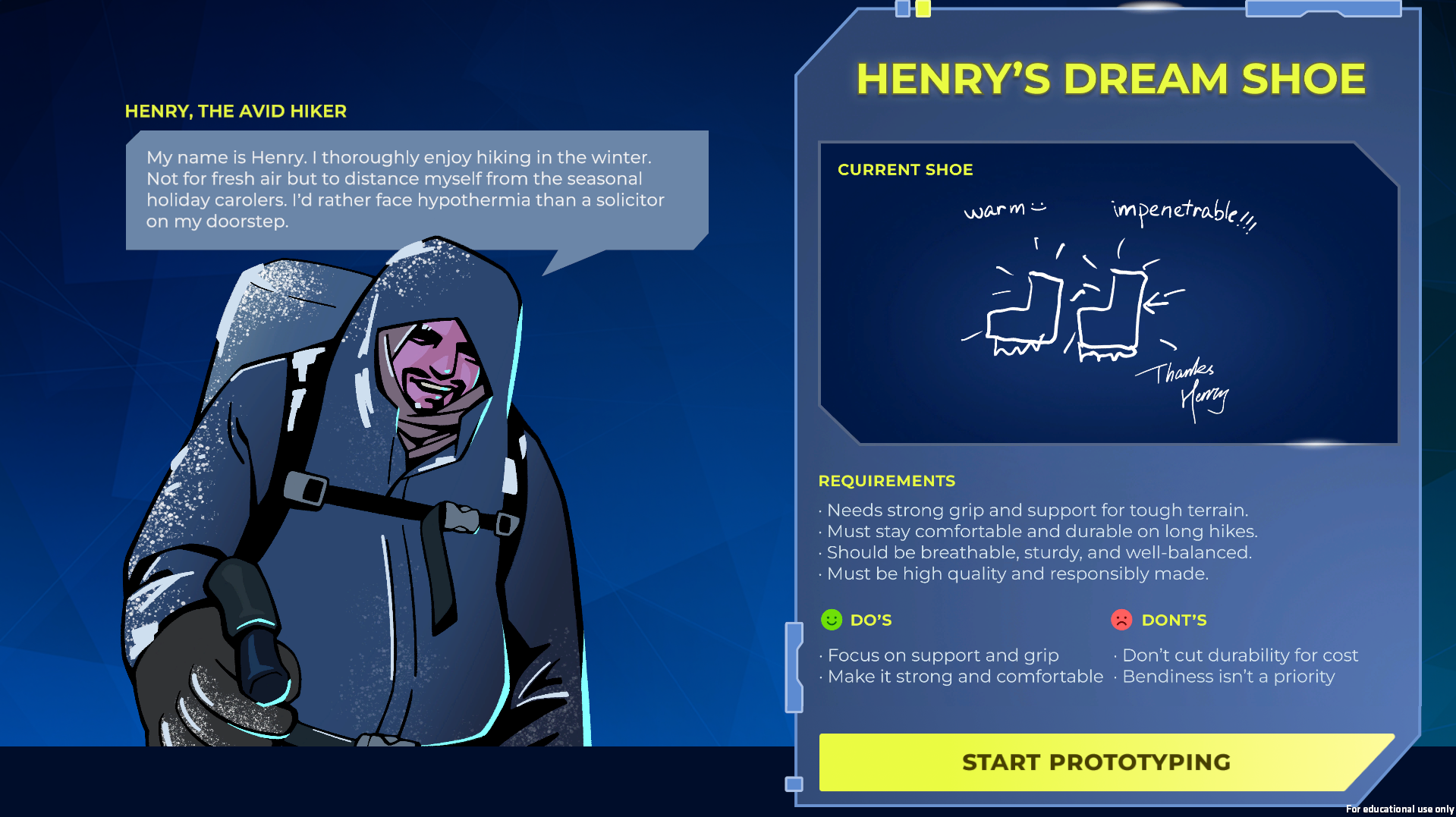
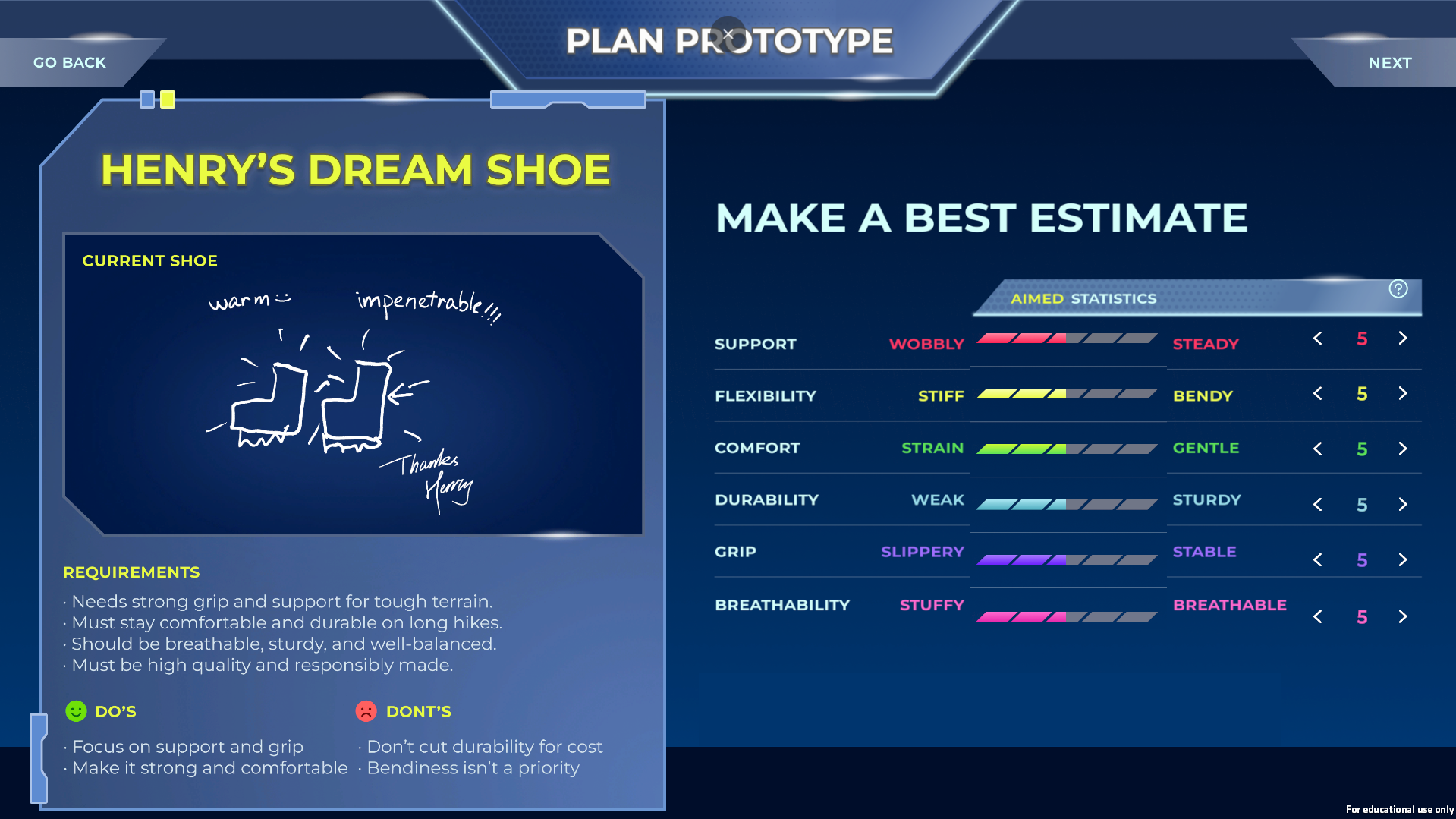
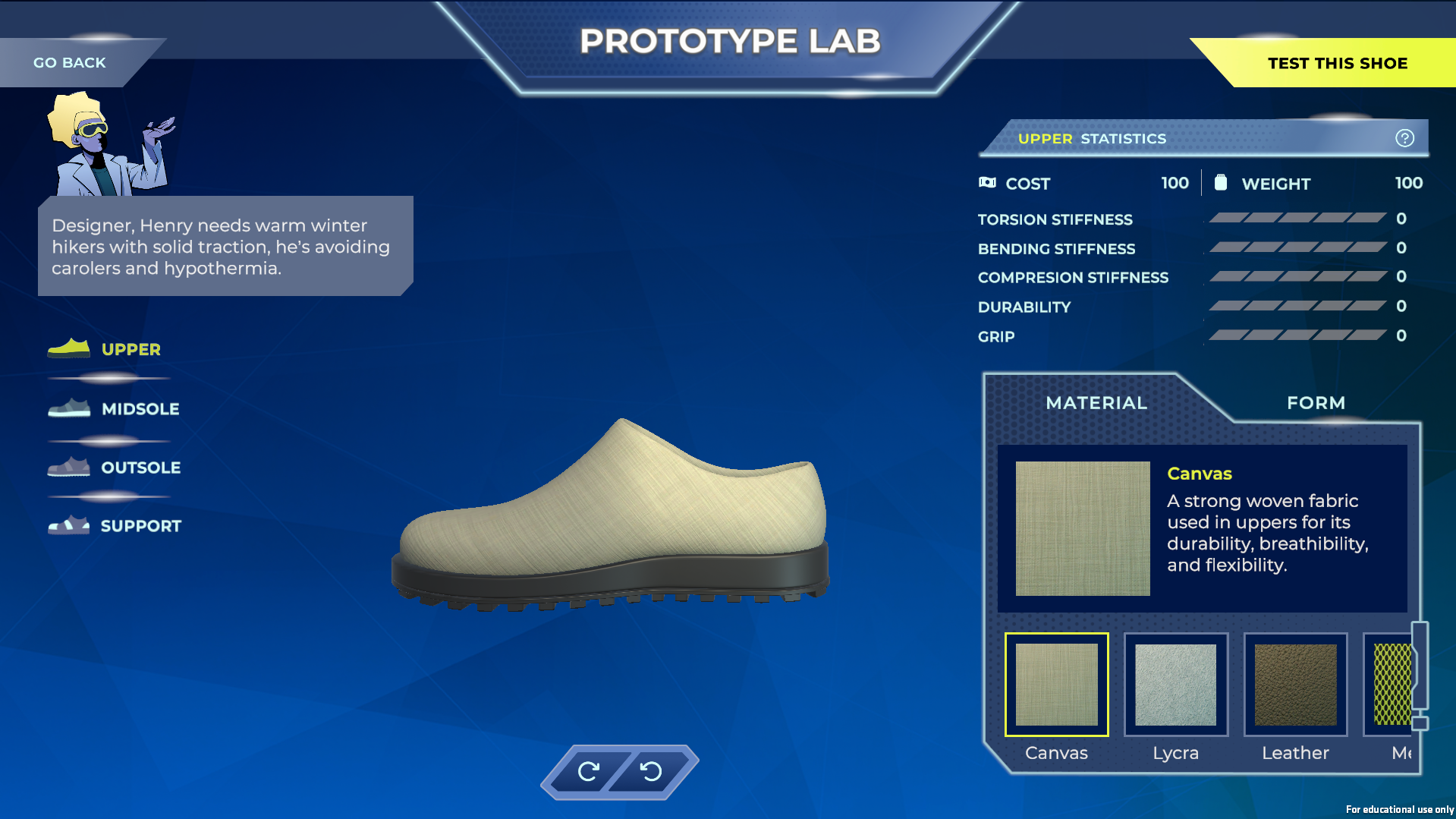
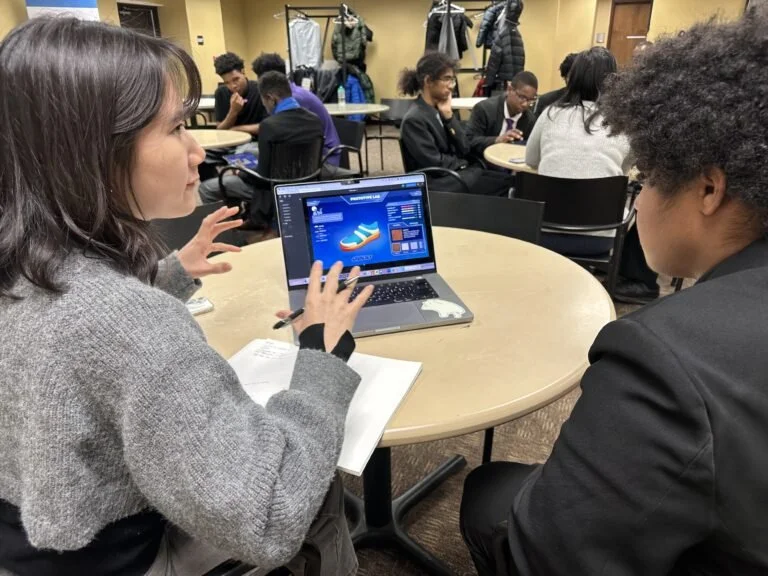
The gameplay goes as follows: the player assumes the role of a designer. A customer arrives with a broken shoe and a list of individual needs the player must accommodate, such as durability, breathability, flexibility, comfort, and grip. Then, the player enters the “Prototype Lab” to customize the product, with live statistics on the shoe's components updating as the player makes choices.
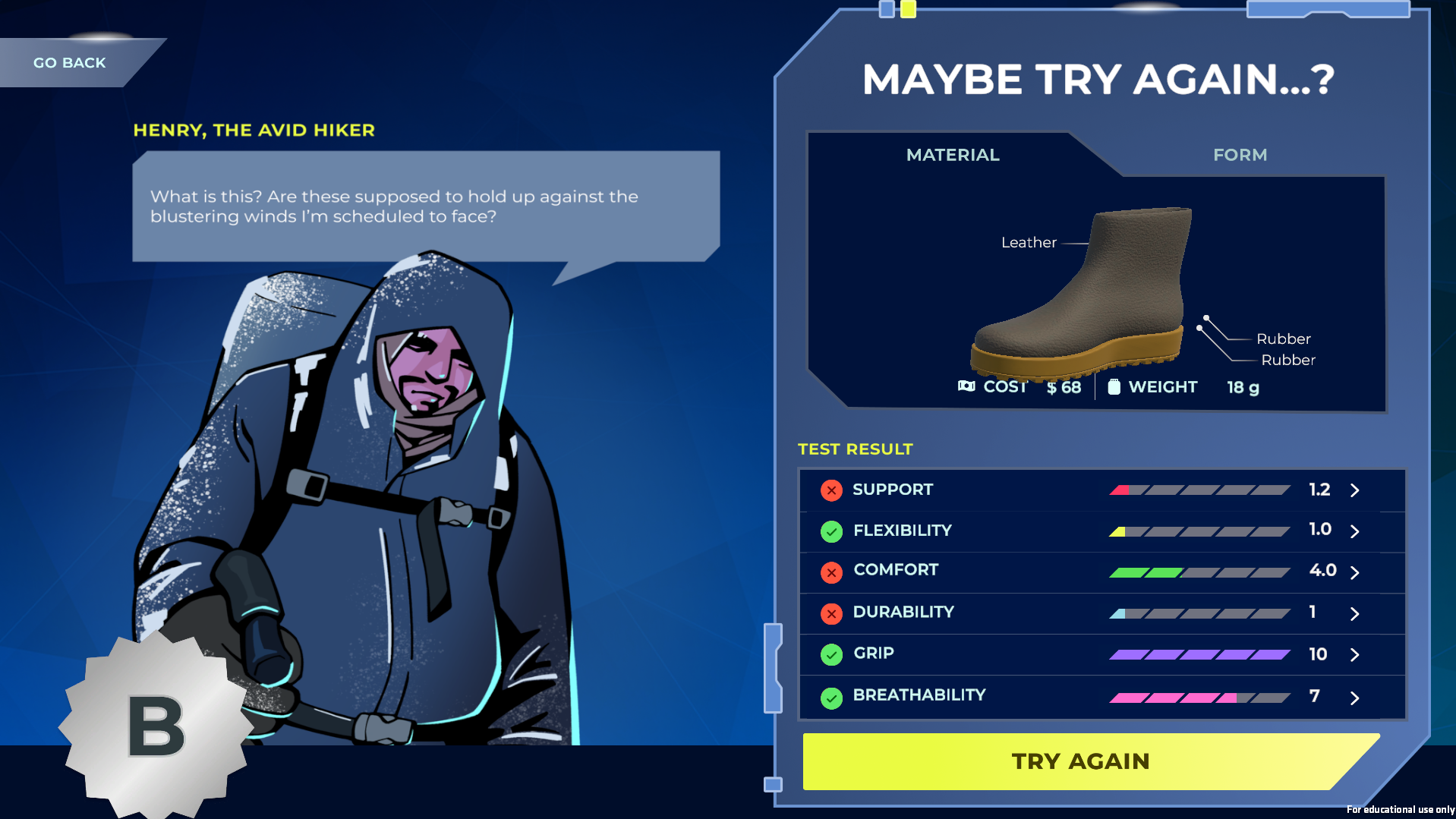
Once the product is complete, the player runs a simulation to see how their design choices impact the customer. Their performance is graded, and through the animation, they can see whether their design choices meet the customer’s requirements. The simulation gives hints on how to improve the next iteration of the shoe. According to Park, the aim of the simulation and suggestions is “to encourage resilience and iterative prototyping.”
Using shoes as the mode for STEAM education was in part due to Johnson’s role in the industry as designer of the World Shoe. The company seeks to promote global health and prosperity through distributing shoes and creating jobs in communities where they are needed. Kicks Lab sought to add another level to the prosperity created by the World Shoe by making footwear a vehicle for education and promoting agency and creativity in young adults.
According to Park, shoes “serve as a perfect medium because teenagers already have an intuitive understanding of how a shoe should feel and work. This makes the connection between material science and daily life very strong.”
Making industrial design more accessible to students was one of the team’s primary objectives when making the project. They gauged the success of this objective by testing the game at Life Male STEAM Academy in Pittsburgh. “We found that students were highly engaged by the ‘human’ element, designing for a specific character and empathizing with their needs. By packaging complex industrial insights from Ansys engineers into a palatable game, we made the ‘heavy’ STEAM concepts approachable,” said Lai.
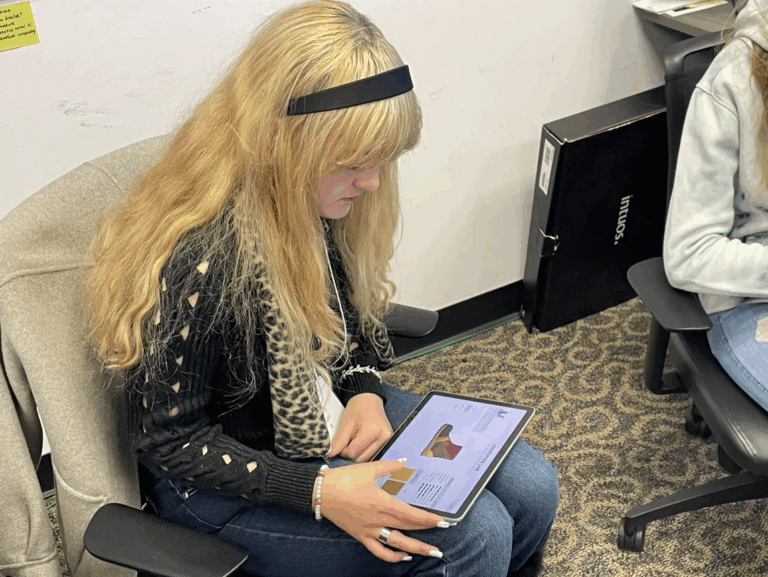
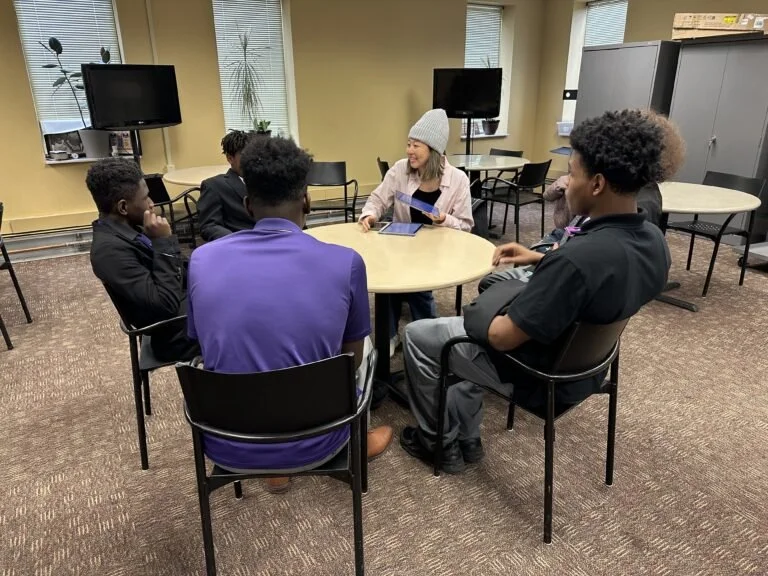
After four months of design sprints, the team presented their project at the Fall ETC Festival in December 2025. Before the festival, the team worked to create onboarding materials to help visitors understand how the game works, but otherwise, the game stood on its own. “Because we did so much work on the backend to make the data and graphics intuitive, we were able to simply hand the iPads to visitors at the festival, and the product spoke for itself,” said Skye Gao.
A playable prototype of the game is now available on the Kicks Lab website.