
A Modern Ghost Story: AI-Powered Tech Lets Teens Chat with an 18th-Century Chemist
Gather around, all who dare, for a true tale of how a team of graduate students used modern technology to connect people’s hearts to history and the real people who lived it. But first, the team had to…build a ghost.
The GhAIst team at the Carnegie Mellon University Entertainment Technology Center (CMU ETC) brought Joseph Priestley’s scientific legacy and unexpected losses to life. They created and installed an AI-powered interactive, immersive, and educational experience for teenage visitors to engage with on-site at the Priestley-Forsyth Memorial Library.
Like any good ghost story, the team’s journey began with a four-hour road trip across Pennsylvania in February, winding through snow-dusted landscapes. Their destination was the Northumberland home of Joseph Priestley, an 18th-century chemist, theologian, and educator. Even though Priestley isolated and discovered oxygen and invented carbonated water, his memory is mostly lost to time.
The team met with experts on Priestley’s history and the project’s clients, Harry Lewis and Jeff Johnstonbaugh, and explored the Joseph Priestley House, where Priestley both lived with his family and worked.
“There’s something about standing in a centuries-old building, from seeing the lab where he conducted experiments, his writing desk, what the light was like in different rooms of the home, that makes you think differently about how to tell someone’s story,” said the GhAIst team.
The GhAIst team included Na Chen (Programmer, Gameplay Logic), Shiwei Hong (Producer), Yuhuai Huang (Programmer, Visuals and Music and Sound Design), Agnes Zhang (Artist and Designer), and Jerry Zheng (Programmer, AI). The GhAIst project CMU ETC instructors were Michael Christel and Scott Stevens, with ETC’s Shirley Saldamarco contributing as a consultant.
Giving a Ghost a Voice
After returning to Pittsburgh with inspiration in mind and reference photos in hand, the team continued their investigation into Joseph Priestley’s life, which informed and inspired the GhAIst gameplay, story, and immersive scenes.
“We dug into books about Priestley, including his diary that was organized by his son, and primary documents he wrote about how and why he conducted his experiments,” said Shiwei Hong (Producer).
This source material, including The Enlightenment of Joseph Priestley: A Study of His Life and Work from 1733 to 1773 by Robert E. Schofield, was used to give Priestley a “voice”. The team’s programmers were taking text input, feeding it into a local large language model (LLM) that can run without internet access on-site, and using the output for local text-to-speech (TTS).
“Hearing ‘Priestley’ speak for the first time was a genuine goosebumps moment,” said the GhAIst team.
The team designed the experience to introduce Priestley to the teenage visitors, through three pivotal points in his life. First, when he invented carbonated water. Second, the life-changing moment when he moved from England to Northumberland after his home and laboratory were burned in the Birmingham Riots in 1791. And third, exploring his dedication to his family and relationship with his wife, Mary.
“After gaining this foundational understanding of what Priestley achieved and about his life, guests can then talk with the Priestley chatbot at the end of the experience,” said Yuhuai Huang (Programmer, Visuals and Music and Sound Design).
Conducting Experiments with the Past
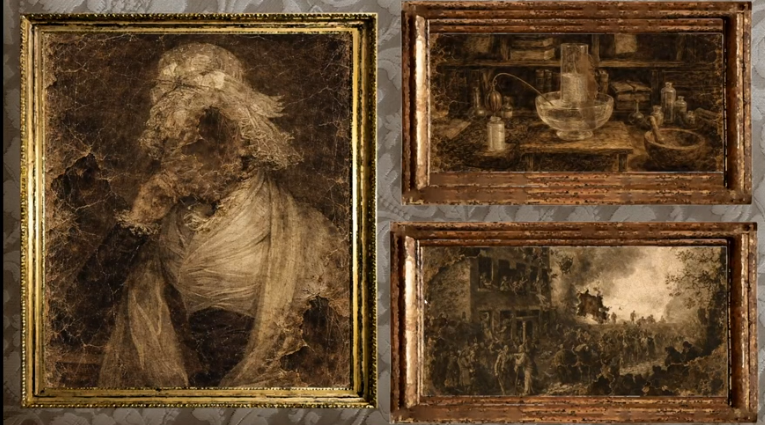
A soft voice calls out from the diary on the wooden writing desk, where flasks for science experiments are scattered. On the wall of the Priestley-Forsyth Memorial Library are three ornate gold frames, but the images they hold are obscured, distorted, and flickering.
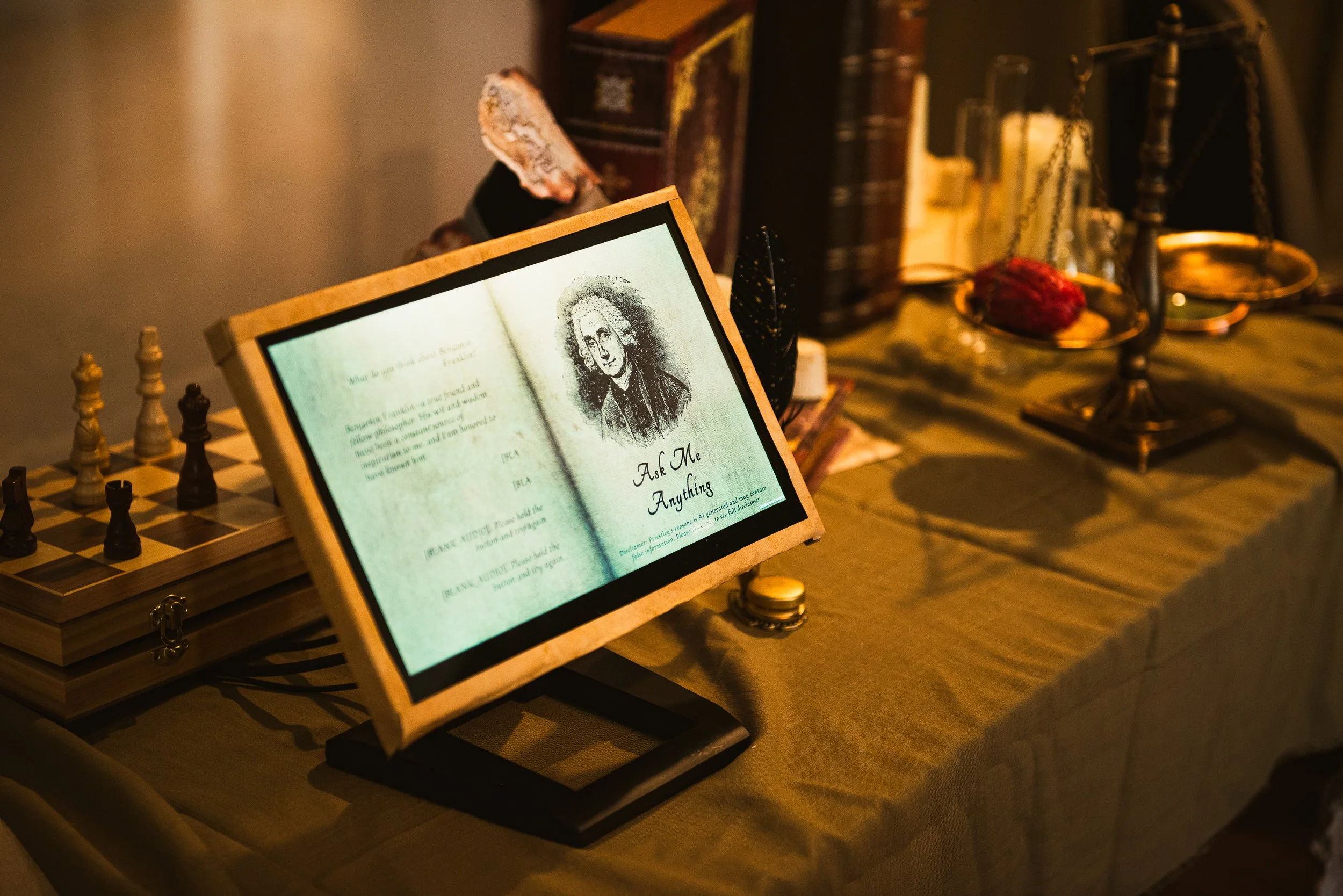
Intrigued, library guests take a seat at the desk and use the touchscreen to open the diary. And when they do, they hear directly from the GhAIst of Priestley, thanks to CMU ETC graduate student and voice actor Ean McFadden, who invites them to explore his memories and uncover a secret about his life.
“We wanted the experience to be immersive, engaging, and magical as our guests learn about the life and work of Priestley. That’s why we came up with this idea of recreating his diary as a touchscreen that guests can interact with,” said Agnes Zhang (Artist and Designer).
Initial contact with Priestley begins with his contributions to chemistry, based on his experimental notes in Priestley’s 1772 pamphlet describing this foundational work to intentionally create carbonated water.
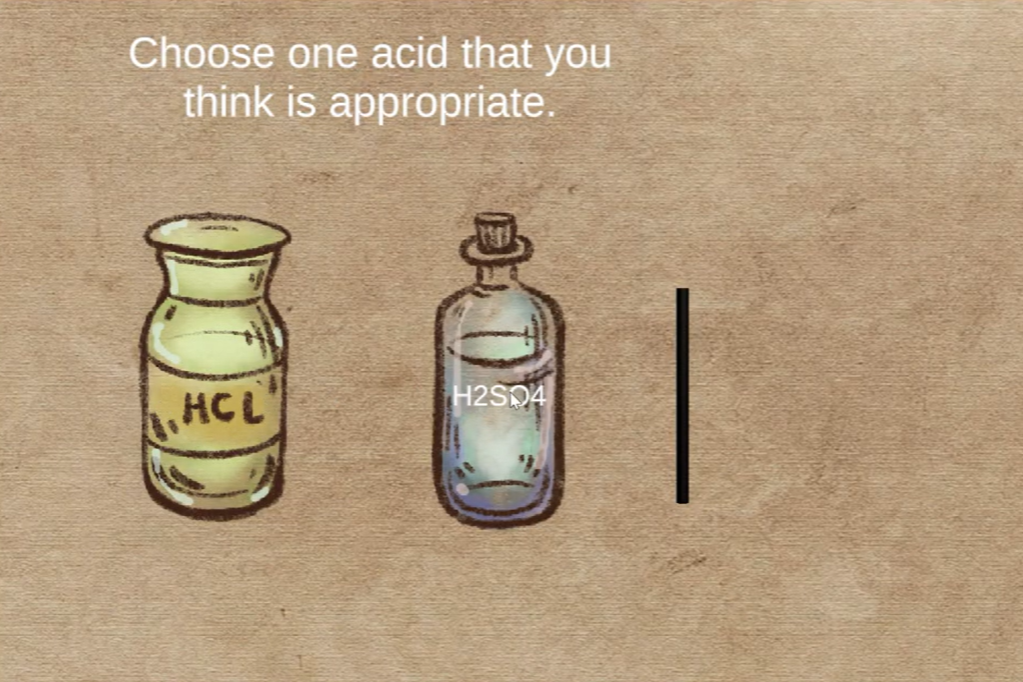
Guided by prompts on the touchscreen diary and laboratory props connected to the hardware, guests reenact Priestley’s experimental steps in a historically authentic way.
A core element of this interactive experience was enabling cooperative gameplay between Priestley and guests via an AI conversation using a microphone at the desk.
By embracing curiosity and the failures inherent in the scientific process, guests connect with the spirit of Priestley’s scientific work. From selecting water and acids to mix, grinding chalk, capturing the gas, and squeezing the prop pig bladder to dissolve the gas into the water. In response, guests watch and hear reactions fizzle, bubble over, and finally become carbonated water on one of the three gold-framed screens above Priestley’s recreated desk.

A Life Lived Beyond the Lab
Priestley then presents an intriguing yet vague statement about his life to guests. Through this mysterious dialogue, guests learn about who Priestley was, and not only what he accomplished, by asking Priestley a series of yes-or-no questions.
“With the yes-or-no mystery and using AI, players can make any guess. The form feeds the interactive nature of the LLM and prompts the player to chat,” said Jerry Zheng (Programmer, AI).
As guests piece together clues from the touchscreen diary and contents of a real envelope and letter, they learn about the Birmingham Riot of 1791, in which Priestley’s home and laboratory were burned, prompting his move to Northumberland. In response, the second gold-framed image on the wall resolves into focus.
Priestley’s responses are powered by the LLM technology, which can handle unpredictable questions and also provide hints. Through auto-speech recognition and voice-to-voice loop, which processes voice input and produces voice output, Priestley continues the conversation thanks to the real-time voice synthesis that the team designed. In other words, while there are recorded lines throughout the gameplay to guide the experience, during the yes/no mystery and free-talk portion, where quests can ask any question, the GhAIst of Priestley isn’t using pre-scripted lines.
A Glimpse into the Past Offers a Depth of Perspective
“Can you guess who created the designs for my new dream house?” and “What did I lose in the end?” asks Priestley in the third chapter of the GhAIst experience, which reflects the time when Priestley was rebuilding his life in Northumberland with his family and his wife, Mary, after the Birmingham Riots.
As the guests complete the puzzle, which shows Mary’s interior design for their home, they experience the joy of seeing the plan. But this time, Mary's shadow in the third framed image above the desk suddenly disappears.
“You can see how Joseph loves his family and how he interacts with his wife Mary. His wife designed a dream house for him, but before that house was built, his wife passed away. In GhAIst, guests feel that sorrow with Joseph Priestley,” said Agnes Zhang (Artist and Designer).
The three gold-framed paintings above the desk are now clearly displayed with three of Priestley’s memories, and then he reveals his secret.
He was part of the Lunar Society, a group of scientists and inventors who shaped the Industrial Revolution, and rewards guests as an “Honorary Successor of the Lunar Society” upon the closing of the GhAIst experience. “A teenager who walked in not knowing who Joseph Priestley was walks out holding a personalized certificate from his ghost,” said the GhAIst team.
Standing up from the desk and diary and turning from the GhAIst installation back to the library and home, guests can now see and experience the historic site in a new light. From Priestley’s contributions to chemistry, to why he moved to Northumberland, and the dreams he and his wife had for their new home.
“During playtesting of the experience, a woman told us that for many years, people only learned about scientists themselves, their ideas, their scientific contributions. But through this game, she said she was able to learn about the woman standing behind this great scientist, who is Joseph Priestley’s wife, Mary. And that she got to know this story behind them and another side of Priestley,” said Agnes Zhang (Artist and Designer).
The GhAIst team discussed the details of Priestley's life with the museum curators and clients, including that after Mary’s death, Priestley’s family stayed with him. “He wasn’t completely alone. That nuance matters for the emotional design. This isn’t a story about a man abandoned by everyone. It’s about a man who lost the person he relied on most, while the people around him tried to hold things together,” said the GhAIst team. Priestley, who was born in Leeds, England in 1733, lived in Northumberland until his death in February 1804.
Closing the Gap Between Our Imagination and Reality
Even as Priestley’s life extended beyond the lab and his contributions to science persist today, his is a story told through GhAIst is one of loss, gain, and, again, loss.
But overall, what is really lost is when we don’t work to uncover, connect with, and learn from the past.
In just 14 weeks, the GhAIst team demonstrated how AI-powered technology, immersive experience, and interactive education can help the past find its voice by bringing to life the stories, struggles, and successes behind the faces and facts that we only read about in books.
“To close the gap between our imagination and reality, there were many practical things we had to consider,” said Agnes Zhang (Artist and Designer).
“This project helped me think about how we can make technology, like AI, really work for people and their needs. Technology is ultimately for the needs of the people. It’s not for just the fancy tech itself,” said Jerry Zheng (Programmer, AI).
The GhAIst experience, which is about 20 minutes long, is currently installed in the Priestley-Forsyth Memorial Library, complete with maintenance documentation and the ability to add new questions and answers for the AI-powered chats with Priestley. The project was sponsored by the Northumberland Pineknotters.
On collaborating with the Priestley experts and the project’s clients, Harry Lewis and Jeff Johnstonbaugh, to accurately design the immersive experience for the teenage audience, the GhAIst team said, “We felt something shift. The project isn’t just ours anymore. The clients are co-invested, co-dreaming, and genuinely counting on us to deliver something that matters to their community.”
Interested in learning more, seeing the immersive experience in action, and hearing what the clients said? You can watch the GhAIst project trailer and learn more here: GhAIst Media.